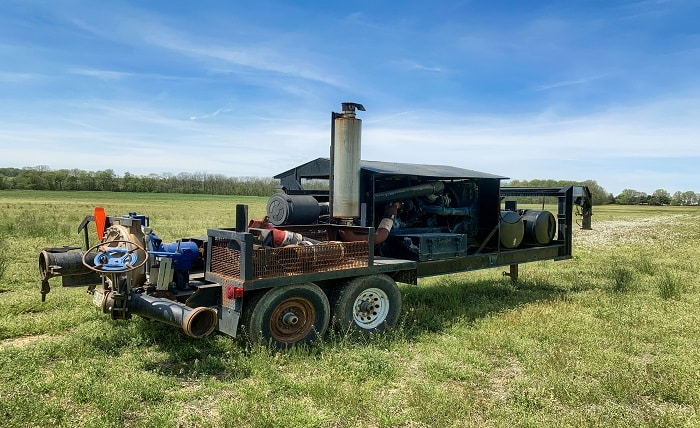
Diesel generators are widely used as backup and prime power sources across commercial buildings, industries, hospitals, construction sites, and other facilities. As emission control becomes increasingly important, selecting the right RECD for DG set requires careful consideration of the generator, exhaust system, operating conditions, and applicable requirements. A CPCB Approved RECD should not be selected only on the basis of price or basic specifications. Businesses need to evaluate compatibility, installation requirements, maintenance needs, monitoring features, and technical support before making a decision.
Understand Your DG Set Requirements
The first step in selecting an RECD is understanding the technical specifications of the diesel generator. The capacity of the DG set, engine manufacturer, model, fuel system, exhaust configuration, and operating load can influence the suitability of an emission control system.
Before contacting an RECD supplier, collect important information such as:
- DG-set capacity in kVA
- Engine make and model
- Engine year and specifications
- Exhaust pipe dimensions
- Typical operating load
- Average operating hours
- Existing exhaust equipment
- Installation location
- Available space around the exhaust system
This information allows the supplier or technical team to assess the appropriate RECD configuration.
Consider the Generator Capacity
RECD systems are not necessarily identical for every generator. A small standby generator and a large industrial DG set may have different exhaust flow rates, temperatures, and installation requirements.
The RECD should therefore be selected according to the generator’s operating parameters. Choosing an incorrectly sized system may affect performance, installation efficiency, or maintenance requirements.
A technical evaluation before purchase is preferable to selecting equipment based only on a general product description.
Evaluate Emission Control Requirements
The purpose of a retrofit emission control device is to work with the existing diesel generator exhaust system and support emission management.
Businesses should understand the emissions associated with their generator and determine what type of control technology is appropriate. Depending on the system design, an RECD may incorporate components intended to address particulate matter and other exhaust-related pollutants.
The actual performance depends on the engine condition, fuel quality, operating load, exhaust temperature, system design, and maintenance.
Check RECD Compatibility
Compatibility is one of the most important selection factors. An RECD should be suitable for the specific engine and exhaust configuration.
Important compatibility points include:
- Exhaust gas flow
- Exhaust temperature
- Backpressure considerations
- Pipe diameter
- Available installation space
- Mounting arrangement
- Electrical requirements, where applicable
- Monitoring and control requirements
The supplier should review the DG-set details before recommending the final configuration.
Look at Installation Requirements
A technically suitable RECD still needs correct installation. Before purchasing, businesses should determine where the device will be installed and how it will connect to the existing exhaust system.
The installation area should provide sufficient access for inspection and maintenance. The exhaust arrangement should also be evaluated to ensure that the retrofit does not create unsuitable operating conditions for the generator.
Professional installation can help ensure that the system is correctly integrated with the DG set.
Consider Monitoring and Control Features
Modern emission-control systems may include monitoring or control features depending on their design. These features can help operators observe relevant operating parameters and identify situations requiring attention.
When comparing systems, ask the supplier about available monitoring features, alarms, sensors, controllers, and data recording options.
A clear understanding of these features can help facility teams manage the equipment more effectively.
Evaluate Maintenance Requirements
Every emission-control system requires appropriate maintenance. Before purchasing an RECD, ask about cleaning intervals, inspection requirements, replacement components, servicing procedures, and expected maintenance responsibilities.
Maintenance requirements may vary according to operating hours, load conditions, exhaust characteristics, and system design.
A system that is technically appropriate but difficult to maintain may create operational challenges later. Businesses should therefore consider lifecycle requirements rather than focusing only on the initial purchase price.
Check Documentation and Technical Support
Documentation is another important factor. Buyers should ask for installation guidelines, technical specifications, maintenance instructions, operating procedures, and relevant compliance documentation.
Technical support can also be valuable when the DG set operates continuously or serves critical facilities.
A reliable RECD manufacturer or supplier should be able to explain the installation process and provide guidance for routine operation and maintenance.
Compare Total Cost Instead of Only Purchase Price
The cheapest system is not automatically the most suitable option. Businesses should consider the complete cost of ownership.
This may include:
- Equipment cost
- Installation cost
- Monitoring components
- Maintenance
- Replacement parts
- Inspection
- Technical support
- Downtime during servicing
Evaluating these factors provides a more realistic understanding of the investment.
Why Engine Condition Matters
An RECD should not be considered a substitute for proper engine maintenance. Poor combustion, worn components, incorrect fuel injection, dirty filters, or other engine problems can influence exhaust emissions.
Before installation, the DG set should be inspected and maintained appropriately. This provides a better foundation for an emission-control system to operate as intended.
Questions to Ask an RECD Supplier
Before placing an order, businesses can ask:
- Is the RECD compatible with my DG-set model?
- What technical information is required for sizing?
- What installation changes are necessary?
- What maintenance schedule is recommended?
- What monitoring features are included?
- What documentation is provided?
- What technical support is available after installation?
These questions can help reduce uncertainty during selection.
FAQs
Can one RECD fit every DG set?
No. RECD selection depends on factors such as generator capacity, engine characteristics, exhaust flow, temperature, and installation configuration.
Is RECD installation suitable for older generators?
Retrofit systems can be considered for existing generators, but suitability should be evaluated based on the engine condition and technical specifications.
Does RECD eliminate the need for DG-set maintenance?
No. Regular engine servicing and RECD maintenance remain important for reliable operation.
Should price be the main selection factor?
No. Compatibility, technical suitability, installation, maintenance, documentation, and lifecycle costs should also be considered.
Conclusion
Choosing the right RECD for a diesel generator requires more than comparing product prices. Businesses should evaluate generator specifications, exhaust characteristics, installation conditions, emission-control requirements, monitoring features, maintenance needs, and technical support. A properly selected and professionally installed system can become an important part of a broader DG-set emission-management strategy. Before purchasing, it is advisable to provide complete generator information to an experienced RECD supplier so that the system can be assessed for technical suitability and operational requirements.